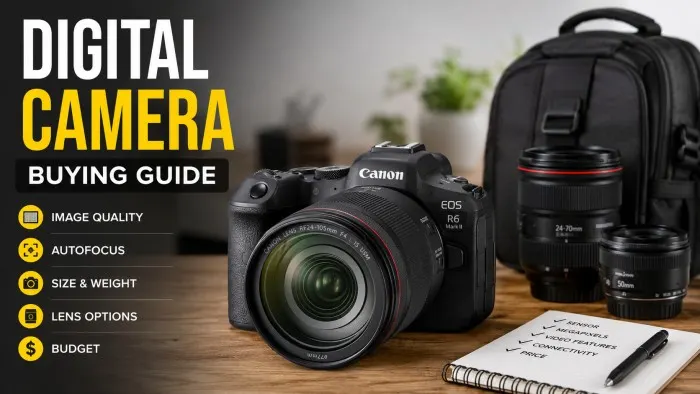
In 2026, the only way to get the right digital camera is to match your camera with your needs rather than your budget. First, determine what you're most interested in shooting, then make sure to set a goal that makes sense for the number of lenses and accessories you can afford, and then select a system that will have enough lenses to expand your collection as you become more proficient.
Whether it's the type of sensor or autofocus system, the lens support, or the video features, this digital camera buying guide has it all covered to help you make a confident and informed choice.
This Digital Camera Buying Guide is the first step
But let's face it, a new camera purchase can be daunting. You have so many brands, so many confusing specifications, and so many price tags that you can't help but get your wallet jangled. Perhaps you're still wondering about getting a mirrorless camera or DSLR, or about taking an over-the-shoulder compact camera? Perhaps you're a novice looking to make wonderful photographs of your children, or maybe you're somebody prepared to turn into a pro photographer.
This digital camera buying guide is here to help. We will walk you through every important feature in simple terms, so you can find the perfect camera without any stress.
You may also read :- How to Set Up Your Canon Camera: Settings and Modes Explained
Understanding the Camera Sensor: The Heart of Your Camera
Your camera's sensor is like its "film." It captures light to create your image. Sensor size is one of the biggest factors in camera quality and price.
Full-Frame Sensors: The Best Choice for Professional Photography
Full-frame sensors are the same size as a frame of 35mm film. They offer the best image quality because they capture more light. This leads to better low-light performance, less noise (grain), and beautiful background blur (bokeh) .
Who is this for? This is the preferred choice for many professional photographers and serious hobbyists who want the absolute best quality. Best digital camera for professional photography often falls into this category . High-end models like the Sony a7 V and Canon EOS R5 are excellent choices if you have a larger budget .
APS-C Sensors: The Best Value for Enthusiasts
APS-C sensors are smaller than full-frame but are still very large and capable. They offer a fantastic balance between quality, size, and cost.
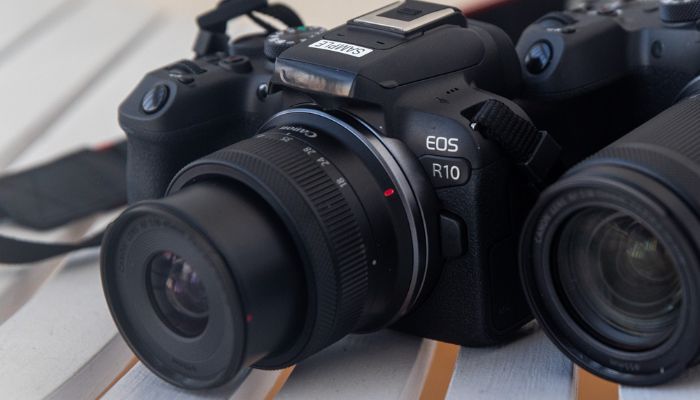
Who is this for? This sensor size is the "Goldilocks" option for most photography enthusiasts. You get amazing image quality without paying the high price of full-frame. Cameras like the Canon EOS R10 and Sony a6700 are perfect for beginners and enthusiasts who want great photos and video .
Micro Four Thirds Sensors: Compact and Lightweight
These sensors are smaller than APS-C. The main advantage is that both the cameras and their lenses are smaller, lighter, and often more affordable.
Who is this for? This is an ideal choice for travel photographers, backpackers, or anyone who wants a powerful but highly portable kit. The OM-D E-M10 Mark IV is a great example of a compact and capable camera in this category .
Mirrorless vs. DSLR: Which One to Choose?
This is one of the most common questions in any digital camera buying guide.
The Modern Standard: Mirrorless Cameras
Mirrorless cameras are the present and future of photography. They work without a mirror mechanism found in DSLRs. This allows for several key benefits.
Key Benefits:
- Lightweight and Compact: They are generally smaller and lighter than DSLRs .
- Superb Autofocus: Mirrorless cameras use on-sensor phase detection autofocus, which is incredibly fast and accurate. This technology excels at face and eye-tracking .
- Real-Time Preview: What you see in the electronic viewfinder (EVF) or on the screen is exactly what your image will look like, giving you complete control over exposure before you press the shutter.
- Great Video Capabilities: They are generally superior for video recording, with features like 4K and 10-bit color .
Verdict: For most people buying a new camera in 2026, a mirrorless camera is the recommended choice due to its modern technology and excellent performance .
The Classic Choice: DSLR Cameras
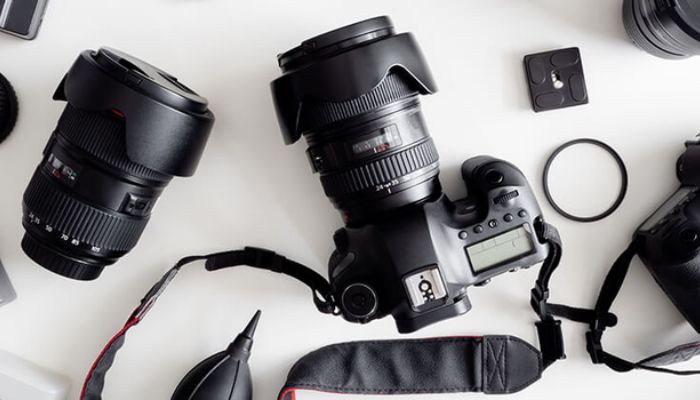
DSLRs use a mirror to reflect light from the lens up into an optical viewfinder. They are still excellent, powerful cameras.
Key Benefits:
- Excellent Value: Because mirrorless is the new standard, you can find amazing deals on used or new DSLRs. They are a fantastic way to get a high-quality system for less money .
- Superb Battery Life: Since they don't use a power-hungry electronic viewfinder, DSLRs can often last much longer on a single charge .
- Optical Viewfinder: Some photographers prefer looking through a glass viewfinder as it's natural and has no lag.
Verdict: If you are on a tight budget or prefer an optical viewfinder, a DSLR is still a great choice . The Nikon D850 and Canon 80D are fantastic options in the used market .
Key Features to Consider: Beyond the Basics
This section of your digital camera buying guide breaks down the technical jargon into simple terms.
Image Sensor and Resolution (Megapixels)
Megapixels (MP) measure the resolution of the sensor. You don't need a massive number of megapixels for most uses. 24MP is the "sweet spot" for most photographers. It provides plenty of detail for large prints and cropping. Higher resolution (like 33MP or 50MP) is beneficial if you crop heavily or make enormous prints .
Autofocus (AF): Never Miss the Shot
This is one of the most important features to evaluate. Look for a camera with fast and reliable Autofocus.
- Face and Eye Detection: This technology locks onto your subject's eye and tracks it perfectly, ensuring sharp focus on people or pets. This is a game-changer for portraits and family photos.
- Subject Tracking: Advanced autofocus systems can track moving subjects like birds, wildlife, or athletes. The Sony a7 V is known for having some of the best Autofocus in the business .
Lens Ecosystem: Invest in Lenses, Not Just the Body
Experienced photographers often say, "Date the body, marry the lens." This means that lenses are a long-term investment. They stay with you even as you upgrade your camera.
- Interchangeable Lenses: If you buy a mirrorless or DSLR, you can change lenses.
- The System: When choosing a brand, consider the "system." Does it have a wide selection of lenses you might want in the future? Canon, Sony, and Nikon all have fantastic Lens Ecosystems .
- Fixed Lens Cameras: Some cameras, like the Fujifilm X100VI, have a permanently attached lens. This offers superior quality in a compact package .
Ergonomics and Portability: How the Camera Feels in Your Hands
A camera can have all the best specs but be useless if it is uncomfortable to hold or too heavy to carry. This is where Ergonomics and Portability come in.
- Weight and Size: Think about where you will take the camera. If you travel a lot, a smaller, lighter camera is essential.
- The Grip and Controls: Before buying, try holding the camera. Are the buttons easy to reach? Is the grip comfortable and secure? Ergonomics and Portability are crucial for enjoying your camera .
Video Capabilities: More Than Just Still Photos
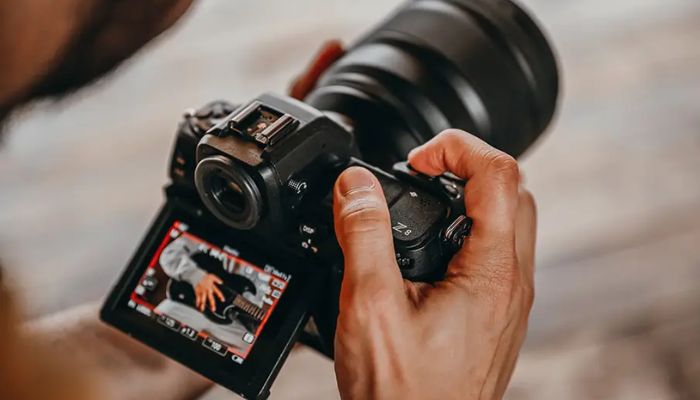
Cameras are now powerful video tools. It's rare to find a camera that isn't good at both. Video Capabilities are a major consideration for many.
- Resolution: 4K is the standard for high-quality video . For future-proofing, consider cameras that offer 4K at 60 frames per second (fps) for slow-motion.
- Stabilization: In-body image stabilization (IBIS) is a fantastic feature. It compensates for small hand movements, resulting in much smoother handheld video and sharper low-light photos .
Additional Features to Weigh
When comparing two similar cameras, look at these final details. Additional Features to Weigh can make a big difference in your day-to-day experience.
- In-Body Image Stabilization (IBIS): Helps reduce blur in photos and videos, especially in low light .
- Weather Sealing: If you plan to shoot outdoors in rain or dust, look for a camera with weather-sealed construction .
- Connectivity: Built-in Wi-Fi or Bluetooth makes it easy to transfer photos to your phone for quick sharing .
- Dual Memory Card Slots: This is a must-have for professionals shooting weddings or events to have an instant backup of all images .
Your Action Plan: How to Make the Final Decision
Now that you've learned about the technology, follow these simple steps to pick your perfect camera.
Step 1: Define Your Needs
What will you be photographing? This is the most important question.
- Family and Everyday Life: A compact and easy-to-use camera with reliable Autofocus is best.
- Travel and Landscapes: Consider size and weight.
- Professional Portraits: Look for a full-frame camera with excellent eye-tracking Autofocus.
- Wildlife and Sports: You need a camera with fast tracking, a high burst rate (fps), and a good Lens Ecosystem for long telephoto lenses .
Step 2: Set Your Total Budget
Remember, the camera body is just the start. Don't forget to budget for a memory card, an extra battery, a camera bag, and most importantly, a good lens. It is often better to buy a slightly cheaper body and invest more in the lens .
Step 3: Consider the Used Market
Buying a used camera is a brilliant way to get high-end gear for a fraction of the price. Trusted retailers like Unique Photo often have used sections. You can find great deals on DSLRs or older mirrorless models like the Sony a6000 .
Conclusion: Your Journey Begins Now
That brings us to the end of this digital camera buying guide. Remember, there is no single "best" camera; there is only the best camera for you. Our experts have tested hundreds of models, and the consensus is that today's cameras are all fantastic . Don't get too caught up in spec sheets. Instead, focus on the features that matter most for the photography you want to do.
Trust your instincts. The camera that excites you and that you want to pick up and use every day is the best one. Happy shooting!
FAQ: Digital Camera Buying Guide
Q1: Is a full-frame camera always better?
A: Full-frame cameras offer the best image quality and low-light performance. However, they are also more expensive and heavier. For most enthusiasts, an APS-C camera provides amazing quality at a better price and is a great starting point. It is a key question in any digital camera buying guide.
Q2: Do I need a separate video camera?
A: Not anymore. Most modern cameras have exceptional video capabilities. For vlogging or content creation, you can use the same camera for both photos and videos.
Q3: How important is it to have a good lens ecosystem?
A: It is very important. The lenses you buy are a long-term investment. A strong lens ecosystem means you have many different lens options to buy, sell, and upgrade to as your skills grow .
Q4: What is the best camera for a beginner on a budget?
A: The Canon EOS R10 is often recommended as the best beginner camera overall . If you're on a tight budget, a used Sony a6000 is an incredible value. Another great option is the Nikon Z5II for a full-frame entry point .
Q5: Is it worth buying a used digital camera?
A: Yes, it is a fantastic way to get professional features on a budget. Just be sure to buy from a reputable seller and check the camera's condition and shutter count . Make sure to avoid listings that say "untested" or "for parts" .