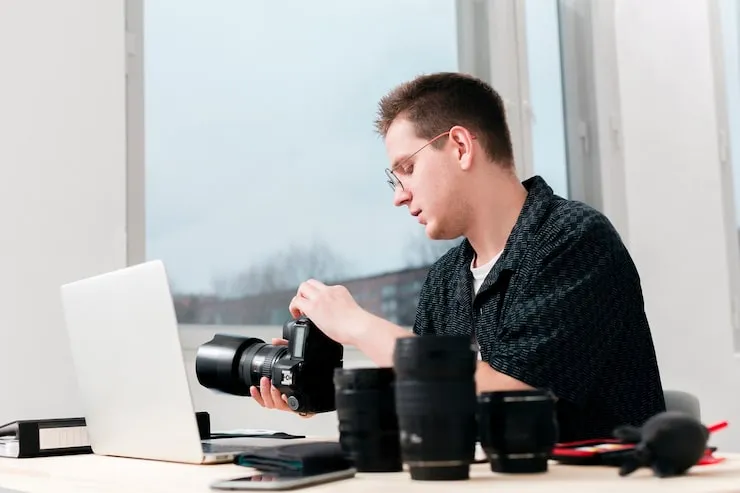
Goodbye, you online photography world! This is the manual that gets you started in a hobby that is fun and creative. We shall look at the Digital camera tips and technology. We also will tell you some simple tips that will allow anyone to capture better pictures immediately.
The second secret of great photos is to know your camera. It is so with pocket-sized cameras and large professional cameras. The fundamental notions tend to be similar. It is possible to learn some simple tricks that may help a lot.
Understanding Digital Camera Tips and Technology

To begin with, it is better to understand the basic types of digital cameras in existence. Each of the types has strengths. Small and compact Point-and-Shoot Cameras are small and simple to operate. They fit right in your pocket. All you have to do is to point at your subject and press the button. The camera makes all the thinking. This renders them ideal in quick and daily photographs.
Professionals have been using DSLR Cameras over the years. A mirror system is used by them so that what the lens sees through the viewfinder is reflected on the screen. They are larger and they capture incredible images. Their camera lenses are also exchangeable to adopt different appearances.
The newer and high-tech stars are Mirrorless Cameras. They lack the mirror of the DSLRs. This causes them to be less large and light. They also have an electronic viewfinder. Mirrorless and DSLR cameras both have amazing picture quality and allow them to switch lenses.
Action Cameras are small durable adventure cameras. They are used by people to do places such as biking or surfing. They are very good in taking moving objects.
You may also read :- Photography Tips for Beginners: Essential Guide to Better Photos
Digital Camera Tips and Technology: The Essentials
Next we will take a glance at some of the fundamental technology and its application. These form the components of a good photo.
- The Magic of the Sensor: The sensor of the camera is the digital film of the camera. It takes the light to give you your picture. A larger sensor normally captures light and more detail. This is the reason behind the better quality of DSLR and mirrorless cameras particularly in low lights.
- Quality in the Lens: The lens forms the eye of the camera. It is equally important to have a good lens as a camera body. A good place to start is with kit lenses that are supplied along with the cameras. However by experimenting with the lenses, such as use of prime lens with fixed focal length, it is possible to make beautiful and sharp photos with a blurred background.
- Resolution is Not Everything: It is widely believed that the more the megapixels, the better the camera. That's not always true! Megapixels determine the size of the print of a photo. In the case of sharing online or small prints, then 10-20 megapixels would be sufficient. Of more importance is the size of the sensor and the quality of the lens.
Essential Photography Techniques for Clearer Photos
We are going to correct some of these common issues using simple methods.
Battling Blurry Pictures: The blurry pictures are usually due to the shake of the camera. Holding the camera with two hands will help in lowering the camera shake. Hug in your elbows. Here, press the shutter button softly. To make the results sharper, learn shutter speed among beginners. An increased shutter speed stops the action.
Getting the Exposure Right: The amount of light or darkness on your picture is referred to as the exposure. It is regulated by three settings; Aperture, Shutter speed, and ISO. This is referred to as the “Exposure Triangle.
- The aperture (f-stop) is what regulates the quantity of light entering as well as the amount of background that is blurred.
- Shutter Speed determines the duration of time the light is allowed and the way the motion is recorded.
- The ISO is used to regulate the sensitivity of the sensor to light.
- The trick to mastering the manual mode is to learn how to balance the three.
Natural light: It is often used, and it is free! The natural light photography may provide you with beautiful results. Attempt to make photos close to a window. Shoot out in the early morning or in the late afternoon. The light is then so softer and warmer. When shooting never make the bright sun to be behind you. It can make people squint.
Creative Composition Tricks
Nice technology makes a picture clear. It is interesting because of good composition. This is where you fit things in your frame.
- Use the Rule of Thirds: Imagine a two-horizontals two-vertical lines as they divide your photo. This makes nine boxes. Have you tried to position your main subject where these lines intersect. This usually produces a less imbalanced and interesting image compared to having the subject in the middle.
- Find Good Framing: Trees, arches, windows, etc.: you can frame your subject using trees, windows, arches, etc. This catches the attention of the viewer to the most significant element of the image.
- Watch Your Background: Your background can be a distraction. Look behind what you are taking a picture of. A plain, simple background is normally pretty effective.
Helpful Camera Features and Settings
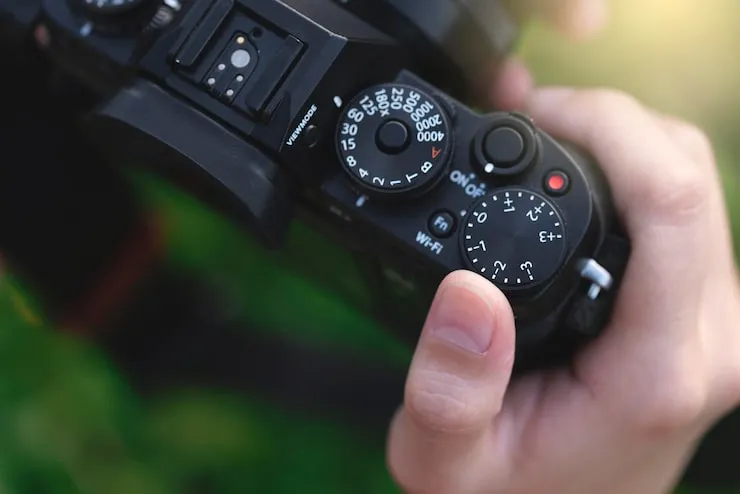
The contemporary cameras are loaded with intelligent features. Here’s how to use some of them.
Autofocus Modes: There is a very intelligent autofocus system in your camera. In still subjects, Single Autofocus (AF-S) is to be used. Continuous Autofocus (AF-C) should be used in case of moving objects such as kids or pets. This assists in maintaining a moving subject.
Learning about White Balance: Have you ever taken a picture that was too blue or too yellow? That’s a white balance issue. The Auto White Balance (AWB) option tends to work. However, when the colors are not right, use the presets such as the Sunny or the Cloudy.
Shooting in RAW Format: In case you desire to edit your photos in future, then shoot in RAW. A RAW file stores all sensor information. It provides you with a significantly greater level of flexibility to correct exposure or colors later on a computer as compared to a regular JPEG file.
Maintaining Your Photo Gear
- Caring helps your camera to last several years.
- When the camera is not in use, it is always best to use a lens cap.
- Wipe the lens with soft microfiber cloth designed to wipe a camera lens.
- Always carry your gear in a camera bag so that it does not bang and get dust.
- Get additional battery power by keeping a charged spare battery always.
Conclusion: Your Travel Begins Now
The world of advanced Digital camera tips and technology is energizing. Begin by learning one unused thing at a time. Hone holding your camera relentless. Attempt utilizing the run the show of thirds. Explore with distinctive sorts of light.
Remember, the best camera is the one you have with you. Utilize these tips to get more sure. Investigate the settings. Most vitally, have fun capturing the world around you. Your special point of view is what will make your photographs uncommon.
Frequently Inquired Questions
Q: What is the most imperative setting for a fledgling to learn first?
A: Begin with Gap Need mode (ordinarily checked as 'A' or 'Av'). You control the opening for foundation obscure, and the camera picks the other settings. It’s a awesome to begin with step absent from full auto.
Q: How can I take great photographs inside without a flash?
A: Utilize as much common light as conceivable from windows. Increment your camera’s ISO setting to make it more delicate to light. Utilizing a quick prime focal point that lets in a parcel of light too makes a difference tremendously.
Q: Do I require to alter my photos?
A: Altering can make your great photographs awesome! Straightforward alterations to brightness, differentiate, and color can make a huge affect. It’s like creating a photo in a advanced darkroom.
Q: What's a great to begin with overhaul from a smartphone camera?
A: An entry-level mirrorless camera or a DSLR for fledglings is a incredible choice. They offer much superior sensors and the capacity to alter focal points, which opens up a world of imaginative conceivable outcomes.