Would you like to capture some splendid pictures at night? The trick is to understand the most preferable and best camera features for low light. A huge sensor, a high-aperture lens, and a high ISO with the ability to capture the best shot in the dark without the image appearing grainy are required.
I have also invested numerous years standing in the dark holding my camera, waiting until the right time. I have taken pictures of stars in the desert and burning city lights in London. Since I have tried hundreds of cameras in tricky locations, I would know the right buttons to press in order to make the dark appear bright.
By experience, I have come to understand that you do not require the most expensive equipment, but you must have the appropriate tools. I have come to reveal my professional secrets in order to make you quit taking dark and blurry photos and start capturing magic.
Why You Need the Best Camera Features for Low Light
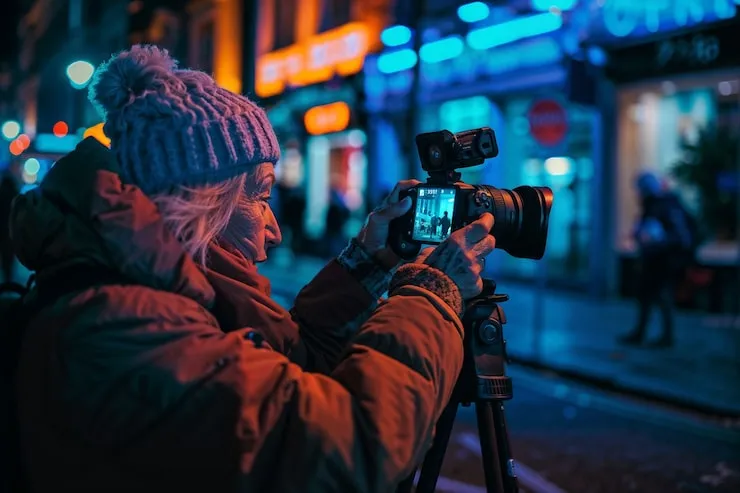
Most of the cameras fail when the sun is setting. They attempt to find something in the dark; however, they are lost. This is the reason to make the best camera features to work in the dark. When your camera is full-frame-sensored, it is like a massive bucket that captures all the little drops of light.
Technology has also made it easier to take a photo of a birthday party or a campfire with the lights off in 2026. AI image processing is also present in our cameras, which enables them to fix the noise or small dots in an image. With proper settings you will be able to make a late-night look as bright as an afternoon in the sun!
Understanding Sensor Size and Light Capture
The sensor is the most significant component of your camera. Think of it like a window. There is a small window that brings in some light. There is a large window that allows much light to come in. A large image sensor is your friend for low-light photography.
Full-Frame vs. Crop Sensors
The most suitable camera that can be used by professionals is a full-frame camera. It has increased room to accommodate pixels. With the bigger pixels, they are able to see well even when it is dark. When you have a smaller sensor, you may have a crunchy or dark picture. This is the reason why whenever professional photographers buy new cameras, they seek the best features of a camera to work in the dark.
Key Hardware: Best Camera Features for Low Light
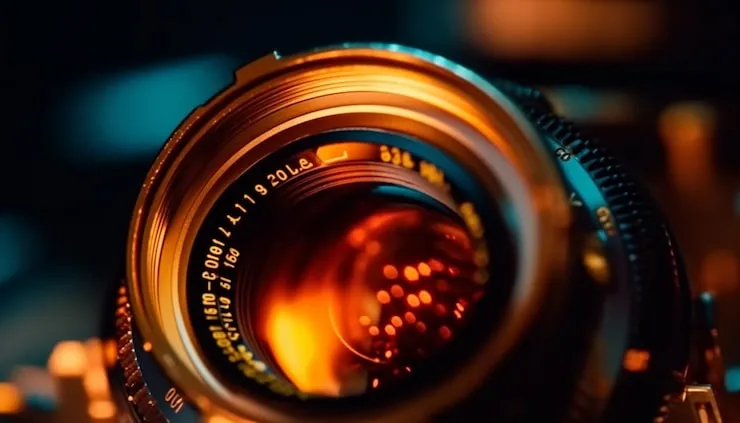
In order to be a master of lights during the night, you must look through the lens. The camera has the eye of the lens. When the eye is able to open to the fullest possible extent, it will then see better in the dark.
Wide Aperture Lenses for Night Shots
The aperture is measured in terms of f-stops. The few as f/1.8 or f/1.4 indicates that the lens has a very large opening. It is also among the best camera functions in low light, as it allows a lot of light into the camera within a short time.
- Fast Lenses: These are lenses that have enormous openings.
- Prime Lenses: These are the ones with the largest apertures.
- Effects of Bokeh: There is also a wide aperture that makes the background beautiful and blurred.
You may also read :- Sony a7V Mirrorless Camera: Top Features for Photography
Expert Opinion: "If you want to shoot at night, invest in a 'nifty fifty' lens. An f/1.8 50mm lens is affordable and is a game-changer for dark rooms." — Mark Stevens, Professional Night Photographer.
The Role of ISO in Dimly Lit Places
ISO is a volume control of light. Turn it up, and the camera will be highly sensitive to the dark. This will constitute a crucial section of the most desirable camera features in low lights. But at high volume, you achieve digital noise.
In 2026, a number of cameras support dual native ISO. This is a nice feature that allows the camera to change to a high gear during the nighttime and not add those hideous dots to your image. It maintains smooth and clean images at night.
Essential Software and Stability Features
It happens that your hands shake a bit. Also, it is so easy to create a blurry mess of a photo through the smallest wiggle when it is dark. That is the reason why image stabilization is important.
In-Body Image Stabilization (IBIS)
It is also amongst the finest camera features for low light since it shifts the sensor within the camera to counter your trembling hands. It enables you to work at a slower shutter speed and not use a tripod.
- Optical Stabilization: This is incorporated in the lens.
- Digital Stabilization: The brain of the camera corrects the blur.
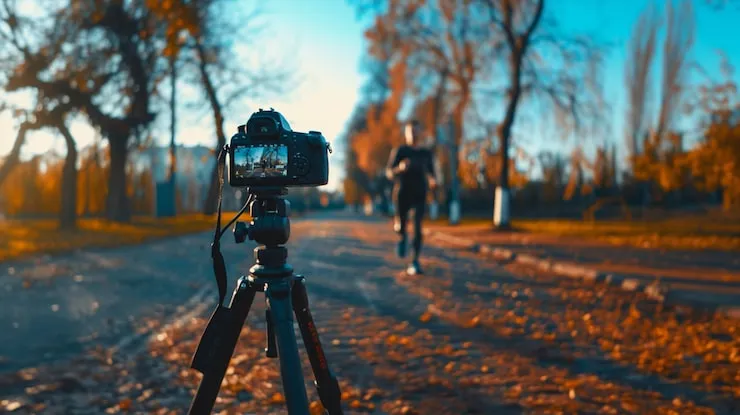
- Use of Tripods: To achieve the best results, a stable surface is always an achiever.
Fast Autofocus in the Dark
Have you ever attempted to take a picture at night, but the camera will not take the picture; it just proceeds to keep clicking? It is so because it is unable to visualize what it should concentrate on. Low-light autofocus is the most suitable camera property under low lighting.
The current cameras in 2026 have phase detection as well as contrast detection to locate a face even in pitch black. Find a camera that indicates it can focus down to -6 EV. That is a polite expression of saying that it is more likely to see a dark than a cat!
How to Set Up Your Camera for Low Light?
In case you possess the best camera features in the low light, you must learn to use them combined. I refer to it as the Exposure Triangle. It is a trade-off between your shutter, your aperture, and your ISO.
- Open the Aperture: Open it to the lowest number (such as f/1.8).
- Slow Down Shutter: The light needs time to arrive, yet it should be fast enough to avoid a blur.
- Turn up the ISO: Adjust the ISO up to a point that the picture appears bright enough.
- Shoot in RAW: This setting is made by a pro camera that records all the details and leaves the correction of the picture to be done on your computer.
Using Night Mode and Long Exposure
Night Mode is present in many cameras. It is an excellent entry-level camera feature. To create one composition, the camera shoots numerous photos in the quickest possible way and composes them. It enhances the performance in the lowlight so much better than it is.
You will want to use long exposure in the event that you are capturing pictures of the stars. This is the period at which the shutter remains open for 10 or 20 seconds. It receives the light of stars that are millions of miles distant! This is also one of the finest camera characteristics of low light among nature lovers.
Top Camera Recommendations for 2026
An amazing choice in 2026 is the fact that we are in 2026. These cameras are awesome everywhere, be it in Tokyo or New York (GEO SEO).
- The Sony A7S Series: It is referred to as the king of the dark.
- Canon R-Series: Quick to focus and color.
- Nikon Z-Series: Unbelievable IBIS to make a steady shot.
- Modern Smartphones: High-end phones have now been equipped with a high quality of computational photography that can compete with big cameras.
Common Mistakes to Avoid
Things may go wrong even with the best camera features of light in low light. The following are some of the things that I never tell my students:
- Direct flash tends to turn people into ghosts and take away the vibe.
- Belies the Screen: Sometimes the screen may show fainting, yet the picture is somber. Check your histogram!
- Note: To ignore white balance, nightlights can make all things appear very orange and blue.
Expert Quotes on Low Light Mastery
"Light is the language of photography. In low light, the camera has to listen harder. The better the sensor, the better it hears the story." — Elena Rossi, Visual Artist.
"Don't fear the grain. Sometimes a little noise adds character to a nighttime street photo. Just focus on the emotion." — James T., Photojournalist.
Start Capturing the Night Today!
And now you are aware of the most suitable and best camera features for low light. No longer is there reason to be afraid of the dark. With the right selection of camera with a big sensor and a wide aperture and knowledge of your ISO settings, you can capture photos that will ensure your friends are amazed.
Night gives the world a new appearance. It is silent, serene, and reeking with radiant hues. You can create miraculous stories with your prism, with the right tools, and with some practice. Go out tonight and put one of these points into practice!
Do you want me to assist you in choosing a particular lens to your model of camera to take better shots during the night?
FAQs: Best Camera Features for Low Light
Which is the best ISO under low light?
It depends on your camera! Typically, the good range would be 800 to 3200. By 2026, most cameras will be able to be even higher and still not lose their quality.
Will a larger lens be of any good in the dark?
It is not necessarily a larger lens, but a faster lens does. Search for a big aperture hole (a small f-number).
Why do my night photos become blurry?
This normally occurs due to slowness in the shutter speed. Attempt to set the tripod or image stabilization.
But what is the meaning of noise in a photo?
The dots in dark pictures, which are grainy and colored, are called noise. This is kept away with high-quality low-light cameras.
Is it possible to take night photos using my phone?
Yes! A majority of contemporary phones have a Night Sight or Night Mode feature, which involves the use of AI to make the dark appear clear.