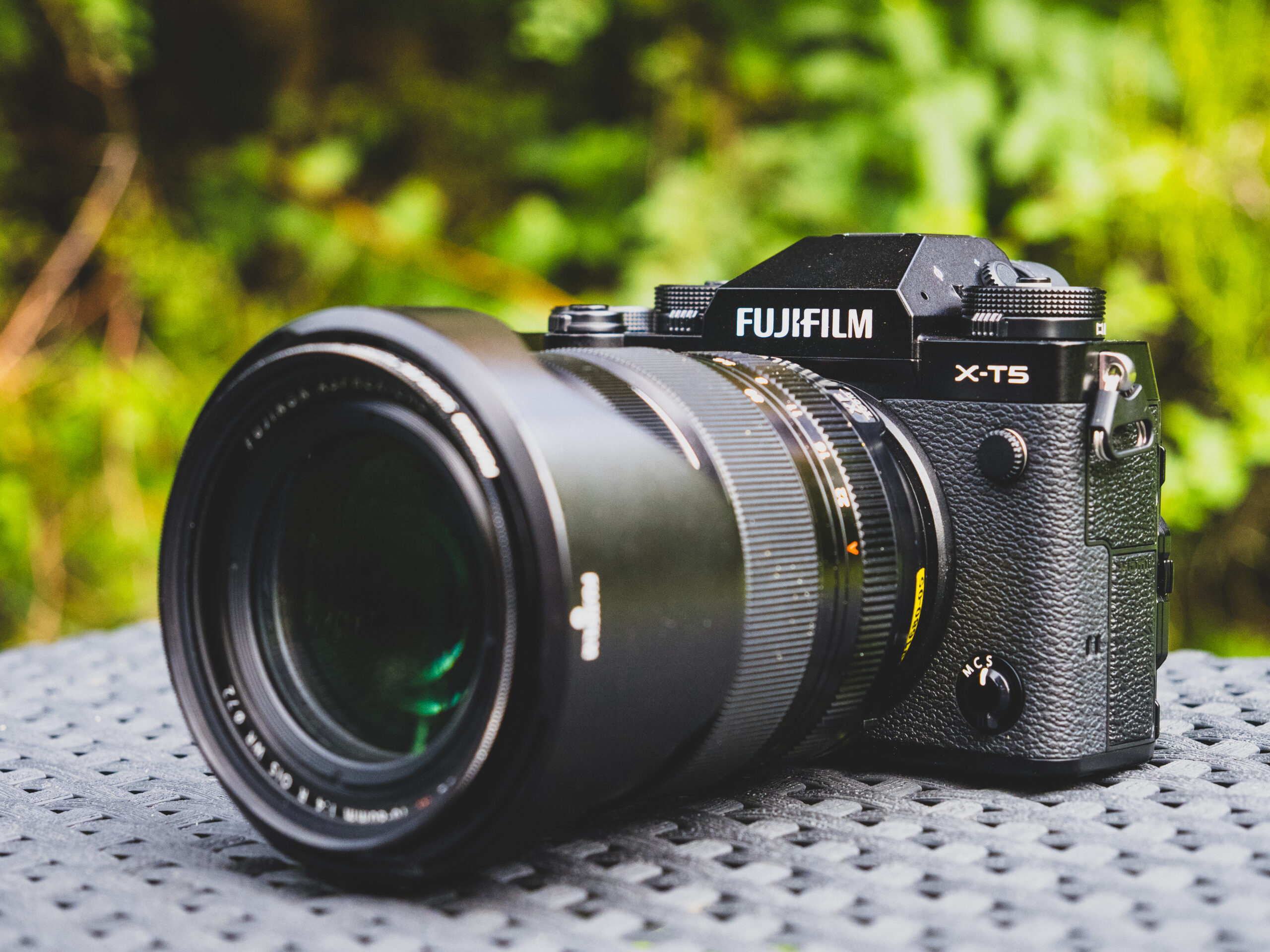
The Fujifilm X-T5 is a compact APS-C mirrorless camera released in November 2022, built around a 40.2-megapixel back-illuminated X-Trans CMOS 5 HR sensor the highest resolution Fujifilm has placed in a non-medium-format body. It shoots 6.2K video, offers in-body image stabilisation (IBIS) rated at up to 7 stops, and fits into a body that weighs just 557g with a battery and card.
The Fujifilm X-T5 targets landscape, portrait, and travel photographers who want maximum image quality in a camera light enough to carry all day. It uses the X-mount lens system and is compatible with the full range of Fujifilm XF and XC lenses.
Fujifilm X-T5 Camera Exists and Who It's Really For
I shot my first roll of film on a Fujifilm compact in 1998. The colours were wrong in a way that was somehow exactly right that slightly warm, slightly desaturated look that film does naturally and digital cameras have spent twenty years trying to replicate.
The Fujifilm X-T5 mirrorless camera is the most direct answer Fujifilm has given to the question of where that colour philosophy goes in a 40-megapixel world. It's not a hybrid camera. It's not trying to be a video-first body or a wildlife-tracking machine. It's a stills camera a proper one, designed around the assumption that the person holding it cares deeply about what a finished image looks like.
You may also read :- Everything About Nikon Z8 Camera Features and Performance
Fujifilm X-T5 Features The 40.2MP Sensor and What It Changes
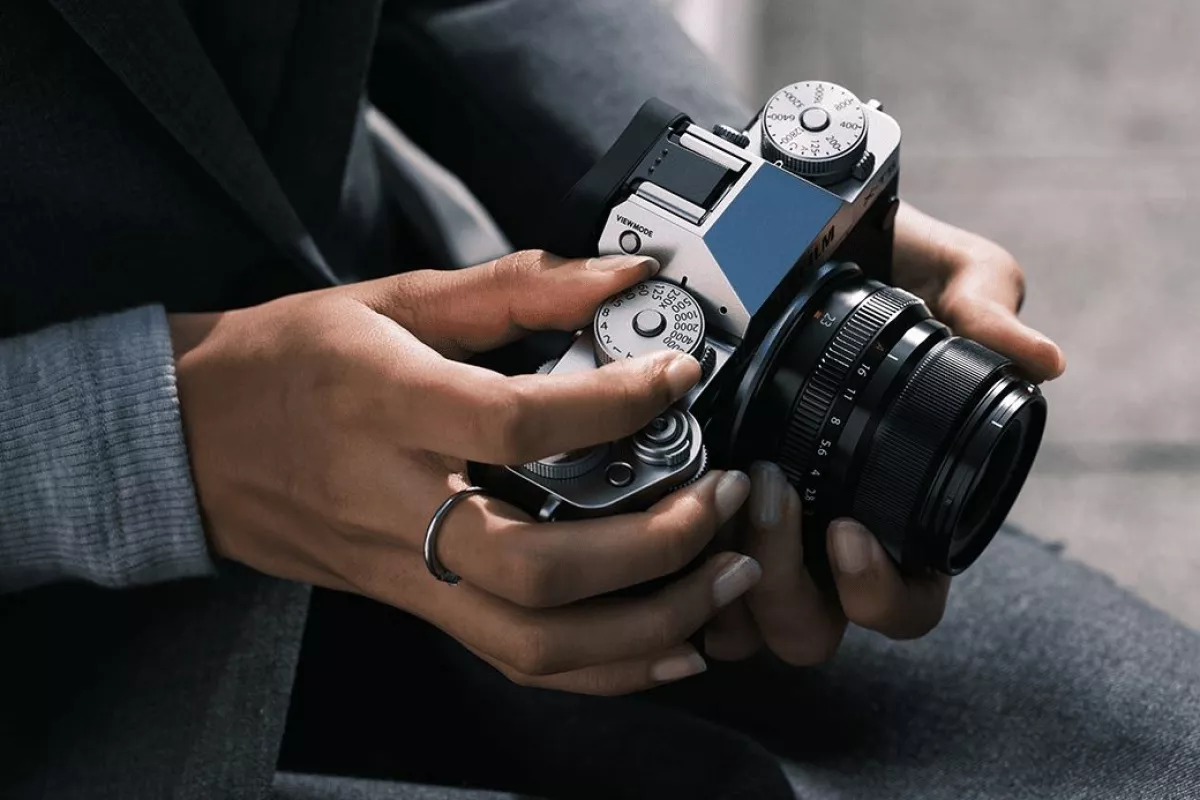
The number that defines this camera is 40.2. That's the megapixel count of the X-Trans CMOS 5 HR sensor inside the Fujifilm X-T5. For context: its predecessor, the X-T4, had 26.1 megapixels. The X-T5 delivers files that are roughly 55% larger by pixel count.
In practical terms, a single RAW file from the X-T5 in lossless compressed format runs to around 80MB. JPEG exports at full resolution produce images measuring 7728 x 5152 pixels. Print one of those at 300 DPI and you get a 65 x 43 centimetre image with no upscaling whatsoever.
The sensor uses X-Trans colour filter array Fujifilm's own pattern that arranges colour receptors differently to the standard Bayer grid used by most other cameras. The claimed advantage is reduced moiré without a low-pass filter and better colour rendering from a smaller sensor area.
Whether X-Trans is genuinely better than Bayer at this resolution is a debate that splits photographers sharply. What's undeniable is the files have a specific character fine detail renders with a crispness that many photographers find more satisfying than technically equivalent Bayer files.
The X-T5 sensor is the most impressive thing Fujifilm has put in an APS-C body. At base ISO, you're getting files that embarrass cameras costing twice as much. The X-Trans rendering at this resolution has a quality to it that's genuinely hard to describe you just notice it when you make a large print. - Damien Lovegrove, professional portrait and commercial photographer, writing on Lovegrove Lighting, 2023
Fujifilm X-T5 Features and Specifications Full Overview
Here are the key Fujifilm X-T5 specifications in one place:
|
Sensor |
40.2MP APS-C X-Trans CMOS 5 HR (BSI) |
|
Processor |
X-Processor 5 |
|
ISO range |
125–12800 (expandable to 64–51200) |
|
Autofocus |
425-point phase-detect AF, subject/face/eye tracking |
|
Burst speed |
15 fps mechanical, 20 fps electronic |
|
IBIS |
Up to 7 stops (sensor-shift, 5-axis) |
|
Video |
6.2K/30p, 4K/60p (1.23x crop), F-Log2, 12-bit internal |
|
Viewfinder |
0.5-inch OLED EVF, 3.69M dots, 0.8x magnification |
|
Rear screen |
3-inch tilting LCD, 1.84M dots (not fully articulating) |
|
Battery life |
Approx. 580 shots per charge (CIPA) |
|
Card slots |
Two UHS-II SD slots |
|
Weight |
557g (with battery and one card) |
|
Dimensions |
129.5 x 91 x 63.8 mm |
|
Weather sealing |
Yes 64 sealing points |
Fujifilm. IBIS How 7-Stop Stabilisation Works in Practice
In-body image stabilisation was absent from the X-T3 and a major selling point of the X-T4. The Fujifilm X-T5 keeps it, refines it, and rates it at up to 7 stops one stop better than the X-T4's 6.5-stop claim.
Fujifilm achieves this through a combination of sensor-shift stabilisation in five axes and lens-based optical stabilisation when using an OIS-equipped XF lens. The two systems communicate and cooperate. In still photography, 7 stops means a 50mm equivalent lens (the XF 35mm f/1.4, for instance) can theoretically hold steady at shutter speeds as slow as 1/4 second.
Fujifilm Low Light Performance and High ISO Handling
The Fujifilm X-T5 mirrorless camera has a native ISO range of 125 to 12800, expandable to ISO 51200. At ISO 800 and below, the files are exceptionally clean noise is barely visible even in shadow areas when shooting RAW.
At ISO 3200 the luminance noise is present but fine-grained rather than blotchy, which means it responds well to noise reduction without destroying fine detail. ISO 6400 is usable for print at moderate sizes. ISO 12800 is where the files start to soften noticeably fine hair detail and fabric texture lose crispness that the 40-megapixel sensor captured at lower sensitivities.
One honest note: the X-Trans colour filter array creates a distinctive noise pattern that some RAW processors handle less gracefully than Bayer noise. Lightroom's X-Trans noise reduction has improved significantly but Capture One and Fujifilm's own Pixel Shift RAW software handle fine-detail noise better at high ISOs. Worth knowing before you decide on a processing workflow.
Fujifilm Autofocus Where It Wins and Where It Doesn't
The Fujifilm X-T5 camera uses a 425-point phase-detect autofocus system with subject recognition face, eye, animal, bird, vehicle, and aircraft detection. Tracking has improved meaningfully since the X-T4, largely because the X-Processor 5 has enough processing power to run the detection algorithms without compromising burst speed.
For portrait work, eye detection is fast and sticky. Lock on to a face and the camera holds the near eye in sharp focus through moderate movement without needing manual correction. For street and travel people moving unpredictably at mixed distances the tracking is reliable enough that I rarely miss the moment I wanted.
For fast sport and wildlife a football match, a bird in flight at speed the X-T5 is not the camera to reach for. The 15 fps mechanical burst and 20 fps electronic burst are competitive, but the subject tracking in high-speed erratic motion doesn't match what Sony's a7R V or Canon's R5 Mark II do at this price. This isn't a weakness of the camera in isolation; it's a consequence of the design priorities. The sensor prioritises resolution over speed.
Fujifilm X-T5 Burst Speed and Buffer Depth
At 15 fps with the mechanical shutter and lossless compressed RAW selected, the buffer holds around 36 frames before slowing. With JPEG only, the buffer runs much longer effectively unlimited at moderate burst lengths.
The electronic shutter reaches 20 fps but comes with the usual caveat: rolling shutter distortion on fast lateral movement. Suitable for stationary or slow-moving subjects; not suitable for motorsport or tennis.
Fujifilm X-T5 Video Capabilities 6.2K Is There, But Read the Small Print
The headline video specification on the Fujifilm X-T5 is 6.2K at up to 30p in F-Log2 with 12-bit internal recording. That's impressive for an APS-C camera at this price point and the footage is genuinely high quality.
The small print: recording time limits at higher resolutions. 6.2K 30p caps at 20 minutes before the camera needs to cool down. 4K 60p introduces a 1.23x crop, reducing the effective field of view. The rear screen is a two-axis tilt not the fully articulating flip-out that video shooters typically prefer for vlogging or solo shooting at unusual angles.
Fujifilm is direct about this. The X-T5 is not a video-first camera. It lacks the heat management and ergonomic compromises that proper hybrid cameras like the X-H2S accept to accommodate long recording sessions. The 6.2K is there for photographers who occasionally want high-quality B-roll. If video is 40% or more of your work, consider the X-H2 or X-H2S instead.
I shoot 90% stills and the video on the X-T5 is genuinely good for the 10% I need. The F-Log2 colour science in 6.2K is beautiful for landscape work. But I'd never tell a videographer to buy this camera the articulating screen alone would be a dealbreaker. - Jonas Rask, Danish photographer and Fujifilm ambassador, fujifilm-x.com blog, 2023
Fujifilm X-T5 Film Simulations: The Feature That Actually Defines the Camera
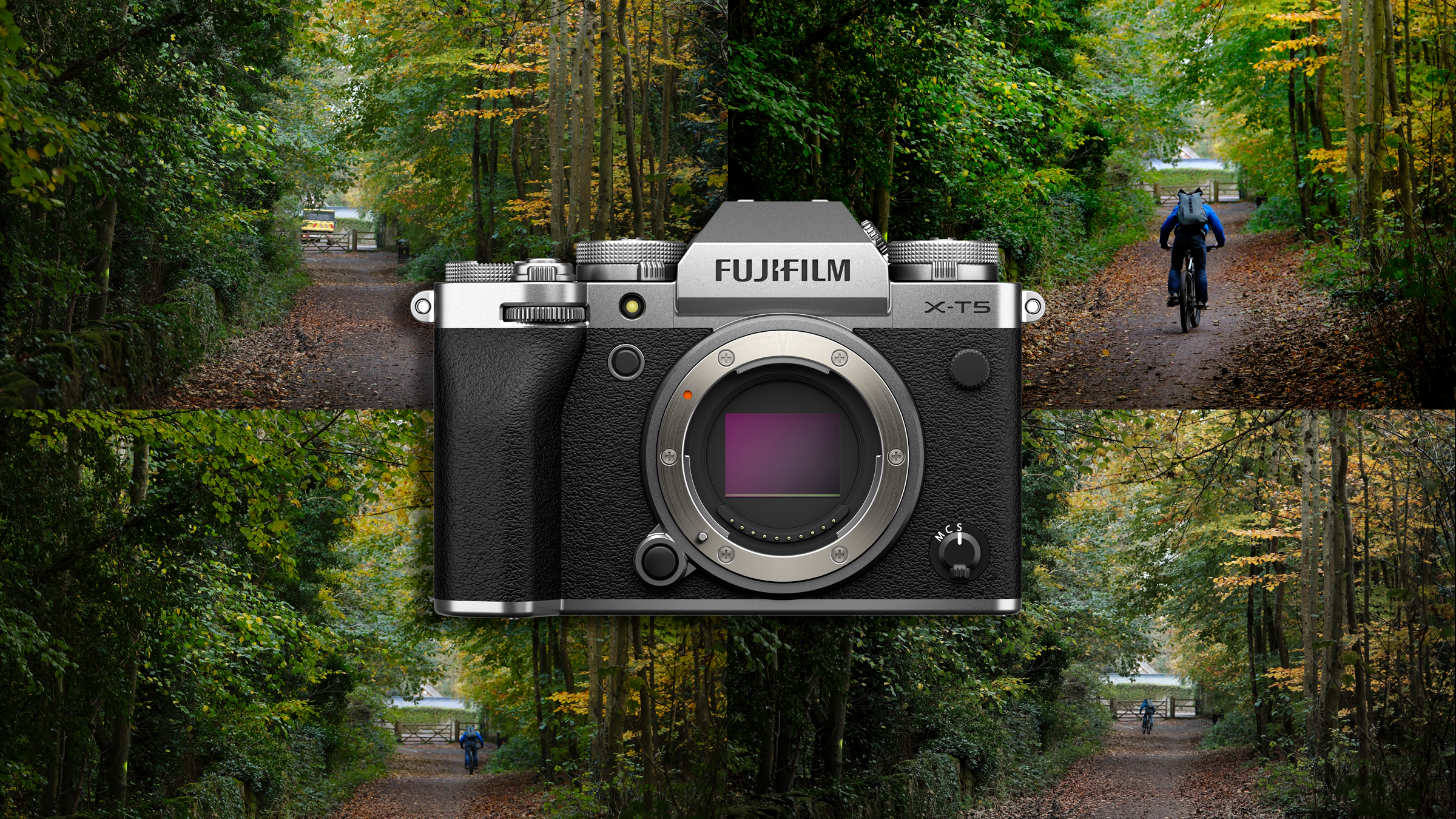
Every Fujifilm X-T5 review covers the sensor and autofocus. Fewer spend enough time on the feature that makes Fujifilm cameras genuinely different from everything else: the film simulation modes.
The X-T5 ships with 20 film simulation options. These aren't Instagram filters. They're colour science profiles built over decades from the actual chemical formulation of Fujifilm's slide, negative, and print films. Provia is the everyday standard neutral, accurate, slightly warm.
Velvia pumps saturation and contrast for landscape work in a way that feels right rather than artificial. Classic Chrome desaturates and pulls shadows toward warm brown-greys, producing a look that suits documentary and street work.
Fujifilm X-T5 JPEG Quality and In-Camera Processing
The X-Processor 5 applies film simulations, grain effect, colour chrome effect, and tone curve adjustments fast enough that shooting JPEG at full 40-megapixel resolution doesn't slow the camera down noticeably. Fujifilm's JPEG engine is, by a wide margin, the best of any camera manufacturer at producing files with a finished look straight from the body.
How the Fujifilm X-T5 Feels to Shoot Handling, Dials, and Weather Sealing
The X-T5 is physically smaller and lighter than the X-T4 a deliberate step back toward the traditional rangefinder-style Fujifilm body proportions. The X-T4 gained weight and bulk to accommodate the larger battery and more extensive video features. The X-T5 trades some of that back for portability.
The top plate carries dedicated dials for ISO, shutter speed, and exposure compensation physical controls that let you set your exposure triangle without touching a menu. This is the Fujifilm design language that the X-T line has maintained since the X-T1.
Photographers who came from film, or who simply prefer tactile feedback over scrolling through digital menus, find this layout faster and more intuitive than any other mirrorless system.
Weather Sealing 64 Points, What That Means Day-to-Day
The Fujifilm X-T5 carries 64 weather-sealing points across the body gaskets at every button, dial, and door. Fujifilm rates it for use in temperatures down to -10°C.
In practice: shooting in light to moderate rain without a cover is fine. Using the camera in dusty environments sand, flour, building sites requires reasonable care but isn't the anxiety it would be with an unsealed body. For anything involving sustained heavy rain or salt spray, a proper rain cover remains good practice regardless of sealing.
Also read :- Sony a7V Mirrorless Camera: Top Features for Photography
Fujifilm X-T5 Review Summary: Who Should Buy It and Who Shouldn't
Fujifilm X-T5 Is the Right Camera If You…
- Shoot landscapes, travel, architecture, or portrait work where resolution and file quality take priority
- Print your work at large sizes A2 or larger and want to do it without upscaling
- Value a small, light body and prefer physical dials over touchscreen-first interfaces
- Already own XF lenses or plan to invest in the Fujifilm X-mount system
- Want excellent JPEG quality straight out of camera with minimal post-processing
Consider a Different Camera If You…
- Shoot sport, wildlife, or events where fast, sustained subject tracking is the priority
- Need a fully articulating screen for video work or vlogging
- Shoot video professionally and need recordings longer than 20 minutes without thermal interruption
- Want the largest possible battery life the X-T5's 580-shot CIPA rating is adequate but not exceptional
Fujifilm X-T5 FAQs
What sensor is in the Fujifilm X-T5?
The Fujifilm X-T5 uses a 40.2-megapixel back-illuminated X-Trans CMOS 5 HR sensor the same sensor family found in the X-H2. It's an APS-C sized sensor (crop factor approximately 1.5x) paired with the X-Processor 5 engine.
Does the Fujifilm X-T5 have in-body stabilisation?
Yes. The Fujifilm X-T5 features a 5-axis IBIS system rated at up to 7 stops of compensation. This works independently and cooperates with lens-based optical stabilisation on compatible XF lenses for maximum effect.
Is the Fujifilm X-T5 good for video?
It records 6.2K at up to 30p and 4K at up to 60p with 12-bit internal recording and F-Log2. The quality is excellent for a stills photographer who occasionally needs video. It's not designed for sustained video work recording time limits at higher resolutions and the absence of a fully articulating screen make it a poor choice as a primary video camera.
How does the Fujifilm X-T5 compare to the X-T4?
The X-T5 has a significantly higher resolution sensor (40.2MP vs 26.1MP), updated autofocus with better subject tracking, improved IBIS (7 stops vs 6.5 stops), and a smaller, lighter body. The X-T4 has better battery life, a fully articulating screen, and a larger grip advantages relevant for video shooters and those using heavy telephoto lenses.
What lenses work with the Fujifilm X-T5?
The X-T5 uses Fujifilm's X-mount, compatible with the full range of XF and XC lenses. At 40 megapixels, lens quality becomes more visible Fujifilm's XF 23mm f/1.4 R LM WR, XF 33mm f/1.4 R LM WR, XF 56mm f/1.2 R WR, and XF 16-80mm f/4 R OIS WR are among the lenses that fully resolve the sensor's capability. Older XF lenses remain compatible but very high-frequency detail may show lens-limited sharpness at 100% magnification.
Final Verdict: The Fujifilm X-T5 Is a Statement About What Photography Is For
Every camera manufacturer has to decide what kind of photographer it's building for. The Fujifilm X-T5 is an unusually clear answer to that question. It's built for someone who wants the best possible still image from an APS-C sensor, in a body light enough to take everywhere, with a colour science that has four decades of film heritage behind it.
The 40-megapixel sensor is the right size for the camera's ambitions large enough for serious large-format printing, not so large that every imperfection in technique or glass becomes visible. The IBIS is good enough to rescue shots that a tripodless photographer would previously have lost. The film simulations are the best in the industry, and at this resolution, they matter more than ever.
If the brief above matches how you work, the Fujifilm X-T5 mirrorless camera is one of the most satisfying cameras to use at its price point full stop.